📬 Longseller Newsletter
Daily insights into books that sell for 10+ years.
Free · Unsubscribe anytime
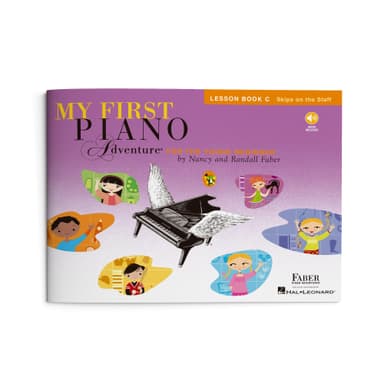
A piano lesson book for young children (ages 5-6), Book C in the 'My First Piano Adventure' series. It introduces musical skips and reading on the grand staff through character-driven stories, games, and activities. The curriculum is supported by online audio tracks for listening and play-along practice, focusing on a playful, multi-sensory approach to early music education.
Released in a 1996 market that we may consider dominated by more formal, drill-oriented piano methods, this book likely succeeded by offering a child-centric, narrative-driven alternative. It appears to have addressed a growing parental desire for educational approaches rooted in play and creativity. Its differentiation seems to come from framing lessons as an 'adventure' with characters, moving beyond the rote mechanics of note-reading to create an immersive, less intimidating experience for the very young beginner.
So why did it keep selling?
The structural factors that keep this book selling appear to be its robust pedagogical ecosystem and its function as a standardized protocol for private music instruction. Unlike standalone songbooks or apps, the Faber method is a comprehensive, multi-level system that provides a complete path for teachers and students, creating high switching costs. The success of this system may be amplified by a network effect among piano teachers; as more teachers adopt it, it becomes a de facto standard, making it easier to find qualified instructors and transfer between them. This ecosystem has proven resilient by adapting its delivery format (e.g., adding online audio) without altering its core pedagogical sequence, thus retaining the trust of teachers while appealing to new generations of parents and students across Anglosphere markets.
From this analysis we name this element Pedagogical Scaffolding. This pattern describes the creation of a structured, multi-stage system that guides a user from novice to expert, rather than offering a single, isolated product. Each level is designed to build directly upon the last, creating a clear, predictable, and reassuring path for the learner and their guide (e.g., a teacher or parent).
The system is often modular, featuring a core instructional path supplemented by optional components for reinforcement or specialization. In this piano method, the Lesson Book is the core, with corresponding Theory, Performance, and Technique books acting as modules. This allows for customized pacing and depth while maintaining overall curricular coherence.
This structure establishes significant switching costs. Once a user—and more critically, their instructor—is invested in the system's progression, moving to a competitor's offering would mean disrupting a proven learning sequence and potentially losing momentum. The perceived risk of changing systems often outweighs the potential benefits of an alternative product.
Professionals and businesses can apply this by transforming a product into a curriculum. This could manifest as a series of software certifications, a tiered set of fitness programs, or a sequence of DIY project kits. The goal is to own the user's entire developmental journey in a specific domain, thereby fostering long-term loyalty and deep integration into their process.
From this analysis we name this element Instructor Network Protocol. This describes a mechanism where a product's value and market position are solidified by its adoption as a standard among a community of professional intermediaries—in this case, piano teachers. The product transcends its status as a mere book and becomes a shared language and operational framework.
This creates a B2B2C (Business-to-Business-to-Consumer) flywheel. The publisher supports the professional instructors with workshops, forums, and supplementary materials (the B2B relationship). These instructors, in turn, mandate or strongly recommend the product to their students and their families (the B2C transaction), solidifying its market share from the ground up.
The network itself becomes a key asset. For parents, the prevalence of teachers using the Faber method means it is easier to find qualified instruction. For teachers, it creates a shared basis for professional development and simplifies the process of accepting transfer students. The product becomes the protocol that enables the network to function efficiently.
This pattern can be replicated in any field relying on expert gatekeepers or instructors. Examples include financial planning software becoming standard for advisors, specific design software dominating university curricula, or a particular project management methodology being championed by certified consultants. The strategy is to empower the professional community so that your product becomes synonymous with professional practice itself.
From this analysis we name this element Evergreen Content Wrapper. This pattern involves protecting a valuable, timeless core asset by periodically updating its delivery method, or 'wrapper,' to align with contemporary technological and cultural expectations. The core content—the pedagogical sequence of musical concepts—remains stable, while the presentation layer evolves.
The stability of the core curriculum is crucial, as it preserves the trust and accumulated expertise of the long-term user base, particularly the instructors who have built their teaching practice around it. However, the wrapper is updated to prevent the product from appearing dated. For this book, the evolution from cassette tapes to CDs and now to online streaming audio and supplementary digital resources is a clear example.
This approach allows the product to remain relevant and competitive without the immense risk and cost of completely redeveloping the proven core content. It balances the need for innovation with the preservation of institutional knowledge and user loyalty, attracting new customers with modern features while retaining the established base.
Businesses can apply this by identifying their own core, evergreen assets—be it a classic recipe collection, a foundational dataset, a series of seminal lectures, or a specific training methodology. They can then build new wrappers around this core, such as launching an app, adding interactive web components, or creating a video series. This strategy maximizes the lifespan and return on investment of high-quality core content.