📬 Longseller Newsletter
Daily insights into books that sell for 10+ years.
Free · Unsubscribe anytime
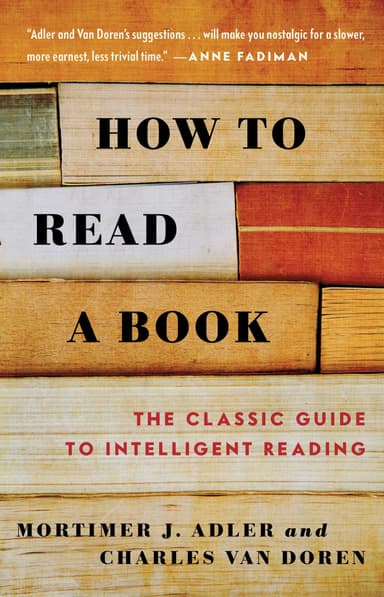
"How to Read a Book" presents a systematic method for intelligent reading, categorizing it into four distinct levels: elementary, inspectional, analytical, and syntopical. The work argues that active reading is a demanding skill essential for true learning and intellectual engagement, providing concrete rules and techniques for dissecting and understanding complex texts.
Published in 1972, the book likely met a need among a growing university-educated populace facing an early "information explosion." It differentiated itself from tactical speed-reading guides by offering a philosophical, systematic framework for deep comprehension. It promised not just efficiency but intellectual mastery, appealing to a post-1960s desire for self-improvement and critical thinking beyond institutional curricula across the Anglosphere.
So why did it keep selling?