📬 Longseller Newsletter
Daily insights into books that sell for 10+ years.
Free · Unsubscribe anytime
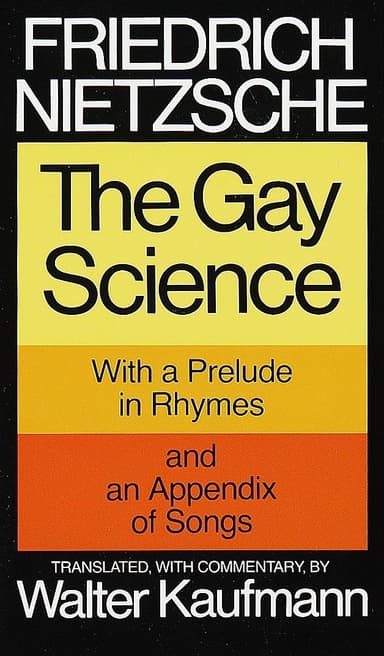
A collection of aphorisms, poems, and philosophical arguments exploring the foundations of Western knowledge, morality, and art. It introduces pivotal concepts like the "death of God" and eternal recurrence, advocating for a life-affirming perspective—the "gay science"—in a world perceived to be without intrinsic divine meaning. The work's structure is fragmented and experimental.
The 1974 Walter Kaufmann translation appears to have been pivotal. It arrived when Anglosphere counter-culture was transitioning into a broader questioning of institutional authority and traditional values. Kaufmann reframed Nietzsche not as a proto-fascist but as a nuanced existential psychologist. This positioning differentiated the book from both dry academic texts and simplistic self-help, meeting a demand for intellectually rigorous yet personally relevant critiques of modern life.
So why did it keep selling?