📬 Longseller Newsletter
Daily insights into books that sell for 10+ years.
Free · Unsubscribe anytime
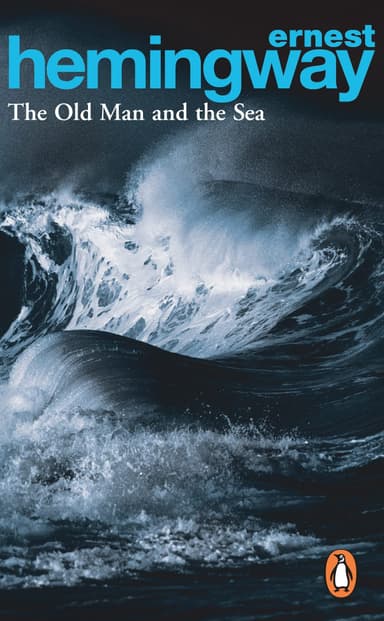
An aging Cuban fisherman endures an 84-day unlucky streak. He sails far into the Gulf Stream and hooks a giant marlin, leading to a grueling, multi-day battle of wills. The novella explores themes of perseverance against overwhelming odds, dignity in defeat, and the elemental struggle between man and nature.
Around 1994, the novella likely served as an antidote to a culture of increasing complexity and corporate artifice. Amidst the rise of the internet and postmodern irony, its stark, elemental narrative of physical struggle and individual dignity offered a powerful counterpoint. It provided a sense of timeless, tangible meaning that differentiated it from the fast-paced, often cynical, thrillers and literary fiction of the era.
So why did it keep selling?
The structural factors that keep this book selling are its condensed, allegorical form and its delivery of a profound universal struggle in a highly accessible package. It differentiates itself from other literary classics by offering a complete epic arc in under 100 pages, providing maximum metaphorical depth for a minimal time investment. The core mechanism is a 'Symbolic Crucible': a simple man, a simple goal, and an elemental setting. This appears to force readers to map their own complex struggles onto Santiago's tangible one. This primal structure makes the novella resilient to era shifts; its themes of endurance and dignity remain potent regardless of technological or social change.
From this analysis we name this element Symbolic Crucible. This pattern involves creating a simplified, isolated environment where a character faces a clear, high-stakes challenge. The setting—a lone man on a small boat in a vast ocean—strips away all social and technological complexity, focusing the audience entirely on the core mechanics of a single struggle.
This crucible acts as a compressed model for larger, more abstract human problems. The specific fight with the marlin becomes a stand-in for any ambitious project, career battle, or internal conflict. By removing the 'noise' of a complex world, the narrative allows the audience to project their own challenges onto the simple, powerful template, finding clarity and resonance.
The mechanism's power lies in its universality. The elemental nature of the conflict—willpower against nature, age against strength—transcends cultural and temporal specifics, making it continuously relatable across generations and markets.
In a business or creative context, one might apply this by creating a core demonstration or a single-use case that perfectly encapsulates a product's value in a high-stakes, easy-to-understand scenario. It isolates the central conflict your product solves, making its purpose immediately and powerfully understood.
From this analysis we name this element Gateway Classic. This describes a work that delivers the emotional and intellectual rewards of a complex category but with a significantly lower barrier to entry. The novella provides the thematic weight of an epic philosophical novel in a format that can be consumed in a single afternoon.
It is not a simplified or 'dumbed-down' version of a classic; rather, it is an intensely focused one. It distills the essence of its genre—the literary exploration of the human condition—into its most potent and concise form. The simple, direct prose and straightforward plot make it accessible to a wide range of reading levels, from high school students to literary connoisseurs.
This structure makes it an ideal entry point for newcomers, building their confidence and appetite for more demanding literature. It also serves as a touchstone for experienced readers, who can appreciate its elegant efficiency and depth. It functions as a durable and perpetually recommended entry into the world of 'serious' reading.
We may consider how this applies to products or services. A business could develop an introductory product that is not 'cheap' but is instead a concentrated, high-quality expression of the brand's core promise. This allows new customers to experience the full value proposition quickly, onboarding them into a larger, more complex ecosystem of offerings.
From this analysis we name this element Process as Prize. This narrative structure decouples the concept of success from the final material outcome. The protagonist, Santiago, ultimately loses the fish to sharks. By conventional standards, he fails. Yet, the story frames his experience as a profound victory of spirit.
The true reward is located in the struggle itself: the nobility of the effort, the respect for his adversary, and the endurance he demonstrates. The mechanism reframes failure not as an endpoint, but as a testament to the ambition of the attempt and the dignity of the individual. This deeply resonates with the universal human experience of striving for something and falling short, validating the inherent worth of the endeavor.
This pattern is highly resilient because it speaks to a reality more common than clear-cut victory. In any economic or social climate, people face setbacks. A story that finds meaning and honor in the process of striving, regardless of the result, offers a durable form of inspiration.
In organizational or personal development, this element suggests focusing on building robust, honorable processes rather than being driven solely by volatile outcomes. It builds long-term trust and morale by celebrating worthy effort, thereby encouraging ambitious attempts and fostering resilience in the face of inevitable disappointments.